


Why are more and more companies in Italy opting for refurbished hardware?
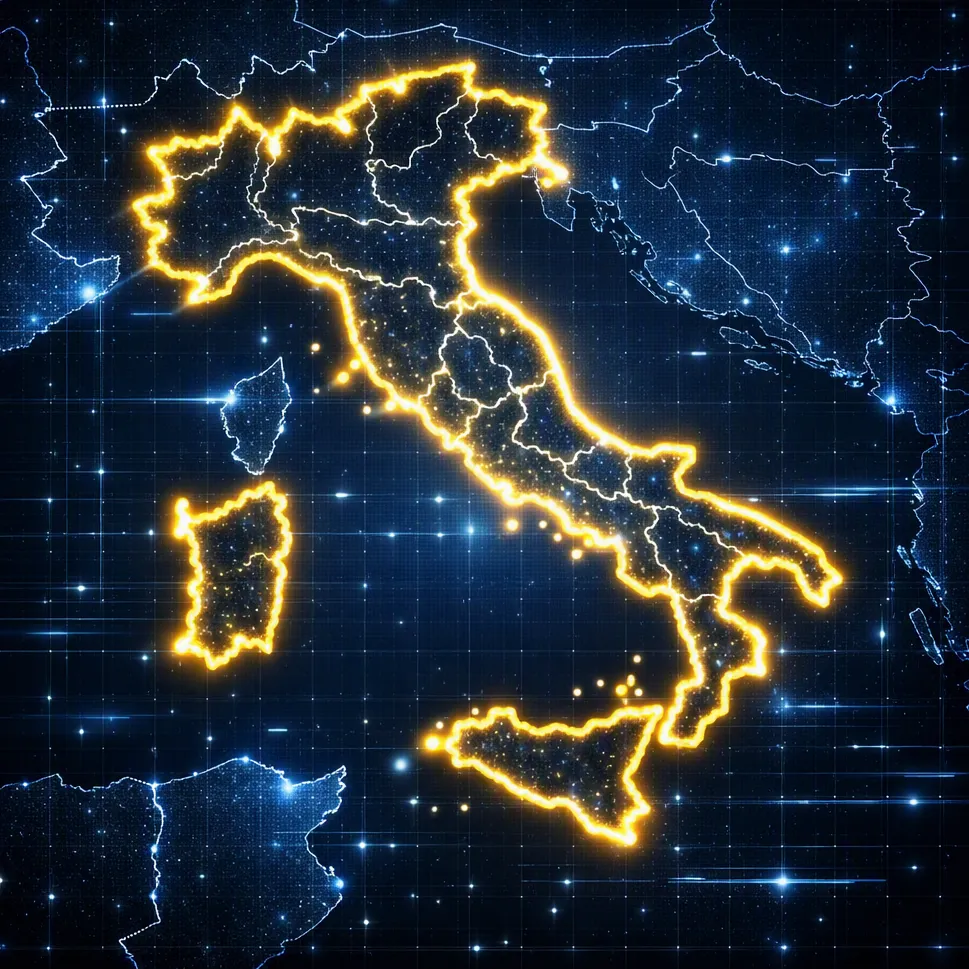
The end of the holiday season in Bavaria is drawing nearer – and so too is the end of the peak season for many hotels, beach bars and campsites in one of our favourite holiday destinations: Italy. What do we immediately associate with Italy? Good food, breathtaking beaches, vibrant cities, art and a keen appreciation for all things beautiful. We’d probably rank computers and technology a bit further down the list. But that would be a mistake. Because alongside la dolce vita, digital transformation also plays a major role: the ‘Leonardo’ supercomputer – named after the genius Leonardo da Vinci – which was inaugurated in November 2022, achieves an impressive performance of almost 250 petaflops and supports cutting-edge European research in medicine, climate science and physics. At the same time, refurbished hardware is increasingly becoming a strategic solution for many Italian companies. And it is precisely this combination that shows that, technologically speaking, Italy has long been able to keep pace with the other major players in the EU. So it’s time for a comprehensive overview: just how modern is Italy really when it comes to IT, technology and AI – and how do hardware life cycles and the handling of e-waste differ from those in Germany?
Just how modern is one of our favourite holiday destinations really?
Scenic roads, espresso, pizza and the sound of the sea – we Germans often associate Italy with precisely these images. A country of contrasts, full of indulgence, culture and joie de vivre. Yet behind that ‘dolce vita’ feeling lies a surprisingly dynamic digital foundation: Italy has undergone a remarkable digitalisation drive in recent years.
Companies are modernising their IT infrastructure, investing in AI projects and expanding data centres – often faster than one might expect. This is particularly evident when it comes to fibre-optic broadband: whilst Germany currently stands at 42.9 per cent coverage (BDMV, as at November 2025), Italy already reaches around 72 per cent of private households (FirstOnline, as at March 2026). A lead that demonstrates just how seriously the country takes its digital future.
At the same time, Italian firms face the same challenges as their German counterparts: rising IT costs, growing data volumes, security risks and the pressure to operate more sustainably. This is precisely where refurbished hardware is gaining in importance – as a pragmatic, efficient and economically sensible solution that fits perfectly with Italy’s reality.
Whilst the AI hype has not taken quite as strong a hold amongst private individuals as it has in Germany, there is a clear upward trend amongst Italian companies.
To what extent does Italy use AI – and how does Germany compare?
Italy is one of the countries with the lowest rate of AI usage in Europe: only 19.9 % of people aged between 16 and 74 used AI tools last year – significantly less than the European average of 32.7 %. Among private individuals, therefore, AI is not yet a mass phenomenon, but there is a clear upward trend in businesses (source: Marketscreener).
According to ISTAT, AI usage in Italian companies stood at just 5.0 per cent in 2023, rose to 8.2 per cent in 2024 and had already reached 16.4 per cent by 2025 (source: Zukunvt.com). This dynamic growth demonstrates just how much momentum digitalisation has gained in the economy. In an EU comparison, however, Italy still lags behind: Denmark (42 %), Finland (38 %) and Belgium (35 %) lead the rankings, whilst Germany, at 26 %, is in the lower mid-table (source: schild-roth.com).
This makes it clear that whilst Germany is focusing more on AI models, start-ups and chip design, Italy is concentrating on expanding its digital infrastructure – particularly cloud services and data centres. Both countries are investing, but with different priorities.

Same driving force – similar focus: What did Germany and Italy invest in in 2025?
In 2025, Germany and Italy were driven by the same goals: strengthening their digital competitiveness, operating more sustainably and reducing technological dependencies. However, their focus differed significantly. Whilst artificial intelligence was the central innovation theme in Germany – ranging from AI start-ups and new business models to in-house chip design initiatives – Italy placed greater emphasis on expanding its digital infrastructure. Cloud services, data centres and modern networks took centre stage, with the aim of laying the foundations for future AI and data projects.
Both countries also invested in green tech, renewable energy and measures to reduce e-waste. However, modernisation in economically challenging times is not always easy – unless you opt for refurbished hardware, which reduces costs, conserves resources and sensibly extends the life of existing systems.
Why do Italian companies buy servers from Germany?
Italian SMEs – the PMI, or ‘piccole e medie imprese’ – face the same hurdles as German firms: rising energy and hardware costs, a great deal of red tape, as well as growing volumes of data and increasing pressure to modernise. Those who cannot keep up quickly fall behind. At the same time, IT budgets are often tight, but decisions are made in a more pragmatic way than here.
This is precisely why, when purchasing hardware, attention often turns to Germany. Whilst the refurbished market in Italy has been growing strongly for around ten years, Germany’s tradition of refurbishment is significantly older and more professionally established. This is evident in the supplier landscape, quality assurance and market structure.
Since the early 2000s, Germany has been one of Europe’s strongest refurbished markets. High demand from industry and small and medium-sized enterprises ensures stable prices, a wide selection and reliable supply chains. Italian companies value this combination – and our reputation for reliability, precision and transparency. What’s more, delivery routes are short, predictable and free from customs formalities.
In short: Italian companies buy hardware in Germany because they receive tested quality, stable prices and systems that are available immediately – without the hurdles and waiting times associated with new goods.
How much do Italian companies save when buying hardware from Germany?
Typically, savings on refurbished hardware in the European market range from 30 % to 70 % compared with new equipment. Thanks to its strong tradition of system integrators and the early establishment of IT remarketing, Germany has been a key hub for refurbished hardware in Europe since the 2000s – an advantage that keeps prices stable and benefits Italian companies.
Why Germany is particularly attractive:
- Large refurbished market – high availability, stable prices
- High quality and testing standards – in-house testing software, sophisticated processes, serial number tracking
- Transparent certification – ISO standards, BSI-compliant data erasure
- Fast delivery routes – short, predictable EU routes without customs formalities
| Category | Advantages of refurbished hardware from Germany | Problems with new hardware | What UK/US buyers should pay attention to |
|---|---|---|---|
| Servers |
|
|
|
| Storage |
|
|
|
| Network |
|
|
|
| Components & Spare Parts |
|
|
|
| PCs & Notebooks |
|
|
|
| Printers |
|
|
|
| Smartphones & Tablets |
|
|
|
| Monitors |
|
|
|
Why is the Germany–Italy supply chain so stable?
The supply chain between Germany and Italy is one of the most reliable in Europe – and there are several reasons for this. Unlike trade with Switzerland or the UK, there are no customs formalities or import duties. This means that, apart from transport costs, there are no additional charges, and deliveries arrive without bureaucratic delays.
Germany is one of Europe’s strongest logistics hubs. Italy benefits from daily lorry routes, consistent transit times and a high level of delivery reliability. For businesses, this means predictable deliveries, short transport distances and a supply chain that continues to function even during times of economic turbulence.
In the refurbished hardware market, there is a further advantage: devices are recorded by serial number, come with test and data-wiping logs, and have been professionally refurbished. For Italian companies with strict audit requirements, this transparency is a real plus – and one of the reasons why the Germany → Italy supply chain runs so smoothly.
Who uses their hardware for longer – German or Italian companies?
According to the European Parliament (last updated: 2024 / source), less than 40 per cent of electrical and electronic waste is recycled. This applies not only to IT and telecoms equipment (e.g. laptops, printers, smartphones), but also household appliances such as washing machines, electric cookers and vacuum cleaners, as well as medical devices, power tools and other consumer goods.
In 2012, approximately 7.6 million tonnes of electrical and electronic equipment were placed on the market in the EU – by 2021, this figure had risen to 13.5 million tonnes. As our consumption and demand increase, we should therefore place greater emphasis on the circular economy so that the problem of ‘e-waste’ can be tackled.
Let’s compare ourselves with Italy: in this country, 12.10 kg of discarded electrical and electronic equipment per inhabitant was recorded (source: Eurostat 2021). In Italy, the figure is significantly lower at 8.50 kg. Incidentally, the frontrunner in this ‘throwaway culture’ is our neighbour Austria, with 15.46 kg of electrical and electronic equipment disposed of per inhabitant – whilst Cyprus, by contrast, records only 3.96 kg per inhabitant.
Do Italian companies really use their hardware for longer?
Unfortunately, it is not possible to generalise on this point. However, it is clear that Germany – whether in the north, south, west or east – has a greater concentration of industry and business across the board. In Italy, by contrast, the south is heavily focused on tourism and agriculture, whilst the north (e.g. Milan, Turin, Bologna and Verona) boasts more industry, more SMEs and more tech companies.
It can therefore be assumed that the north tends to purchase more IT hardware and tech devices, and that these differing lifestyles alone give rise to different approaches to and needs for hardware and technology. German companies – and private individuals too – often upgrade their hardware early on and follow ‘trends’, whilst in Italy the focus is primarily on the lifespan of the equipment.
This is not a cliché, but pure practical experience gained from over 20 years in IT remarketing. Servers in particular, which are considered ‘outdated’ here, are still highly sought-after in Italy. Budget servers in Germany are usually purchased by start-ups or very small businesses – as an entry-level device for digitalisation, but with an ‘expiry date’. As soon as the company is ‘up and running’, it upgrades.
In Italy, in our experience, things are slightly different. Here, the focus is on what the server ‘can do’ and whether this is sufficient for the business. The price and durability of the equipment, as well as affordable spare parts, take centre stage. Older generations are upgraded as and when required and – despite being several years old – continue to run reliably and stably for many more years.
Italian companies plan their IT modernisation later, but in a more targeted manner. Refurbished hardware therefore fits perfectly into this strategy, as it extends the life of existing systems without the cost of a complete overhaul.
How strong is awareness of sustainability in Italy and Germany?
Both countries recognise that significant progress is needed on environmental and climate issues to bring about real change. Both must overcome many challenges and hurdles to meet the targets set for 2030.
Stellen wir die Zahlen einmal gegenüber (Quelle: EEA / veröffentlicht im September 2025):
Agriculture & Food- In 2022, 18.1 % of Italy’s land area was under organic farming
- By comparison, the figure for Germany was only 9.8 %
- As of 2023: Italy 20.8 %
- Germany, by contrast, only 13.9 %
- Net emissions/sequestration in 2023, Italy: –53,588.8 kt CO₂ eq
- In Germany in the same year: 68,652.8 kt CO₂ eq
- In Italy: 19.6 % in 2023
- In Germany: 21.5 % in 2023
Italy therefore performs significantly better in terms of organic farming, recycling rates and its net greenhouse gas balance, because its soils and forests sequester more CO₂ overall than they emit. Germany, on the other hand, is slightly ahead in terms of the share of renewable energy and demonstrates a more robust structural energy transition in this area.
Overall, Italy is more sustainable in the areas of land use, the circular economy and CO₂ sequestration, whilst Germany leads the way in energy policy and the expansion of renewable energy sources.
👉 What we’re also seeing in practice is that, whether it’s private individuals or businesses, in Italy or Germany, the issue of sustainability has come more into focus in recent years – particularly when it comes to consumption and the purchase of hardware. This is not only due to the attractive prices offered by second-hand hardware, but also because buyers have developed a different awareness of the issue.
Why private individuals and businesses in Italy should opt for refurbished hardware
Italian buyers are price-conscious, quality-oriented, risk-averse and sustainability-driven. This leads to an attitude that could almost be described as ‘digital serenity’: hardware is not replaced hastily, but continues to be put to good use – and refurbished equipment is the logical, sensible way to modernise.
In Germany, modernisation often takes place prematurely – in Italy, by contrast, hardware is frequently used for longer and often enjoys a second or even third lease of life. Users are less wasteful, but rather pragmatic and appreciative.
The advantages of refurbished hardware are clear:
- Devices make economic and environmental sense
- More sustainable and environmentally friendly
- You can modernise without unnecessarily upgrading to higher-spec models
- Supply chains (particularly from Germany) are reliable, stable and fast
- Prices are unbeatable compared to new goods
So you could say: certified, second-hand hardware is like good Parmesan – slightly ‘matured’, carefully inspected and full of quality. A product you can trust.

👉 If you want to make your IT in Italy more efficient, more modern and more resource-efficient, we’ll support you every step of the way – from purchasing hardware to selling your old equipment. On our ‘About Us’ page, you’ll find the right point of contact for your enquiry straight away.